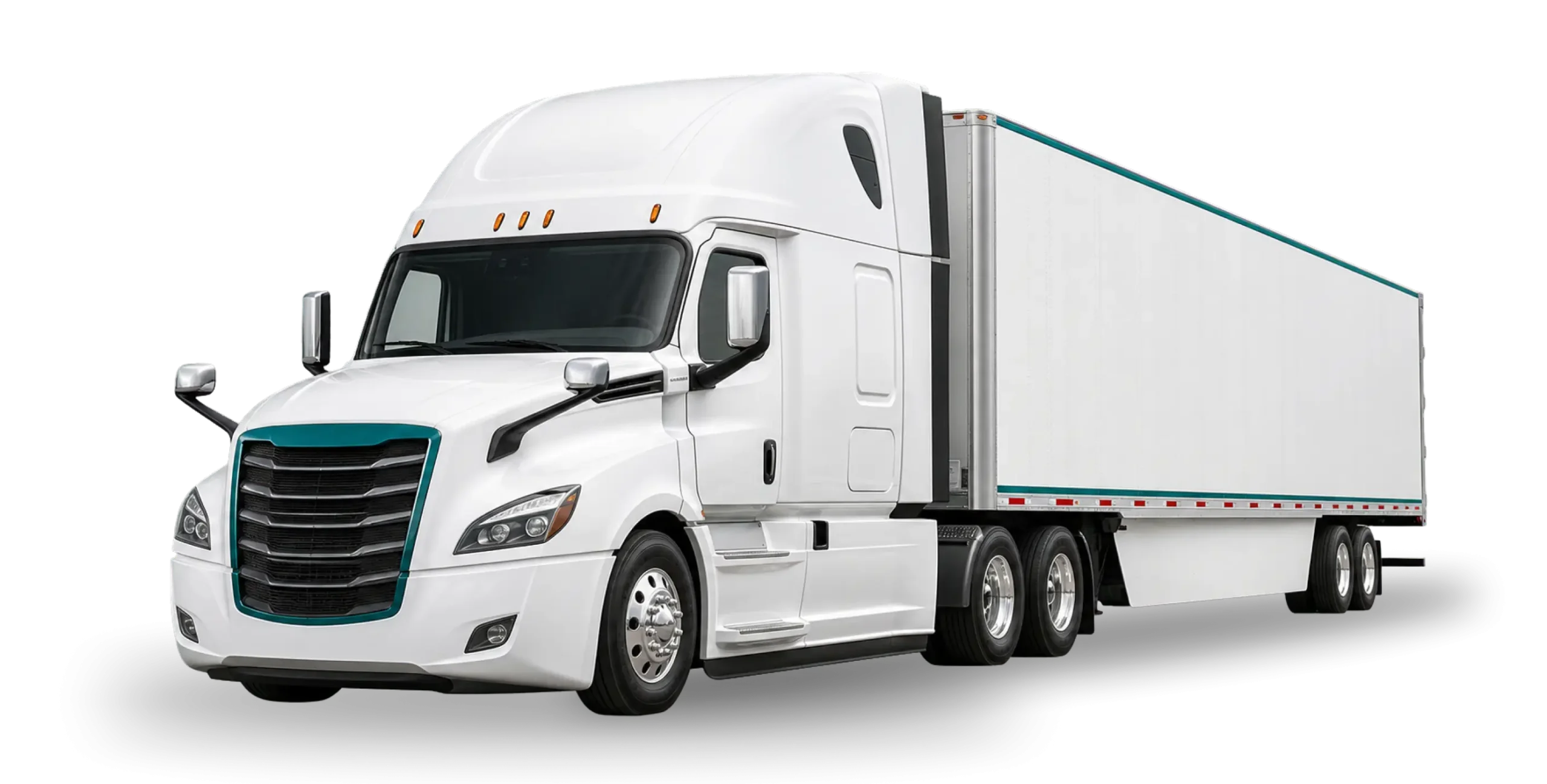
Trucks, trailers, reefers, and equipment on one register, with service history, utilization, and running cost attached to each. Know what you own, what it is doing today, and what it is costing you to keep.
A fleet is easy to count and hard to actually know. Step through each area below to see how Axleflow keeps registrations, service work, availability, and cost tied to the individual assets they belong to
Asset Register
Service History & Work Orders
Fleet Utilization
Lifecycle Cost & Replacement
Parts, Tires & Inventory
ASSET REGISTER
Every Unit on One Sheet, Not Four
Each truck, trailer, and piece of equipment carries its own record with VIN, plate, ownership, specs, and current status, so nobody is phoning the shop to ask which trailer has the reefer unit on it.
Automated drop-and-hook scheduling
Registration, plate, ownership, and insurance details on the record
Every inspection, repair, and service visit records against the unit with parts, labour, and shop invoice attached, so a truck’s history follows it instead of living in a filing cabinet.
Work orders raised, tracked, and closed against a specific unit
Parts, labour, and invoices attached to each job
Complete service history from purchase through disposal
See which assets are moving, which are parked, and which have not turned a kilometre in three weeks. Idle equipment is the easiest cost to fix once you can actually see it.
Active, idle, and out of service status across the fleet
Distance and revenue per unit over any period
Spot underused equipment before you lease another one
Purchase price, payments, fuel, repairs, and downtime add up per unit over its whole life. When maintenance starts outrunning the payment on a newer truck, the number tells you before the breakdown does.
Total cost of ownership tracked per unit
Maintenance spend trending over the life of the asset
Replacement decisions backed by real operating numbers
Track what is on the shelf, what came off which unit, and what needs reordering. Tires in particular carry real money, and most fleets have no idea where theirs are.
Parts and tire inventory tracked with quantities on hand
Items issued against the work order and unit that used them
Every repair, part, and invoice tied to the unit it belongs to.
03
Fleet Utilization
See which assets are earning and which are just parked.
04
Lifecycle Cost & Replacement
Total cost of ownership, unit by unit, over its whole life.
05
Parts, Tires & Inventory
Know what is on the shelf before you order more.
STORY
“We were quoting on more trailers when the register showed us nine already sitting at a yard we barely use. Two of them had not moved since February. That report paid for the software several times over." Doug Verhoeven ”
Most fleets are carrying equipment they do not need and running trucks they should have replaced. Both problems are invisible without per-unit numbers, and obvious the moment you have them.
CONNECTED AXLEFLOW
See How Dispatch Connects to the Rest of Axleflow.
Dispatch doesn’t work in isolation. Axleflow links it to driver pay, compliance, lead generation, and the tools your back office already relies on.
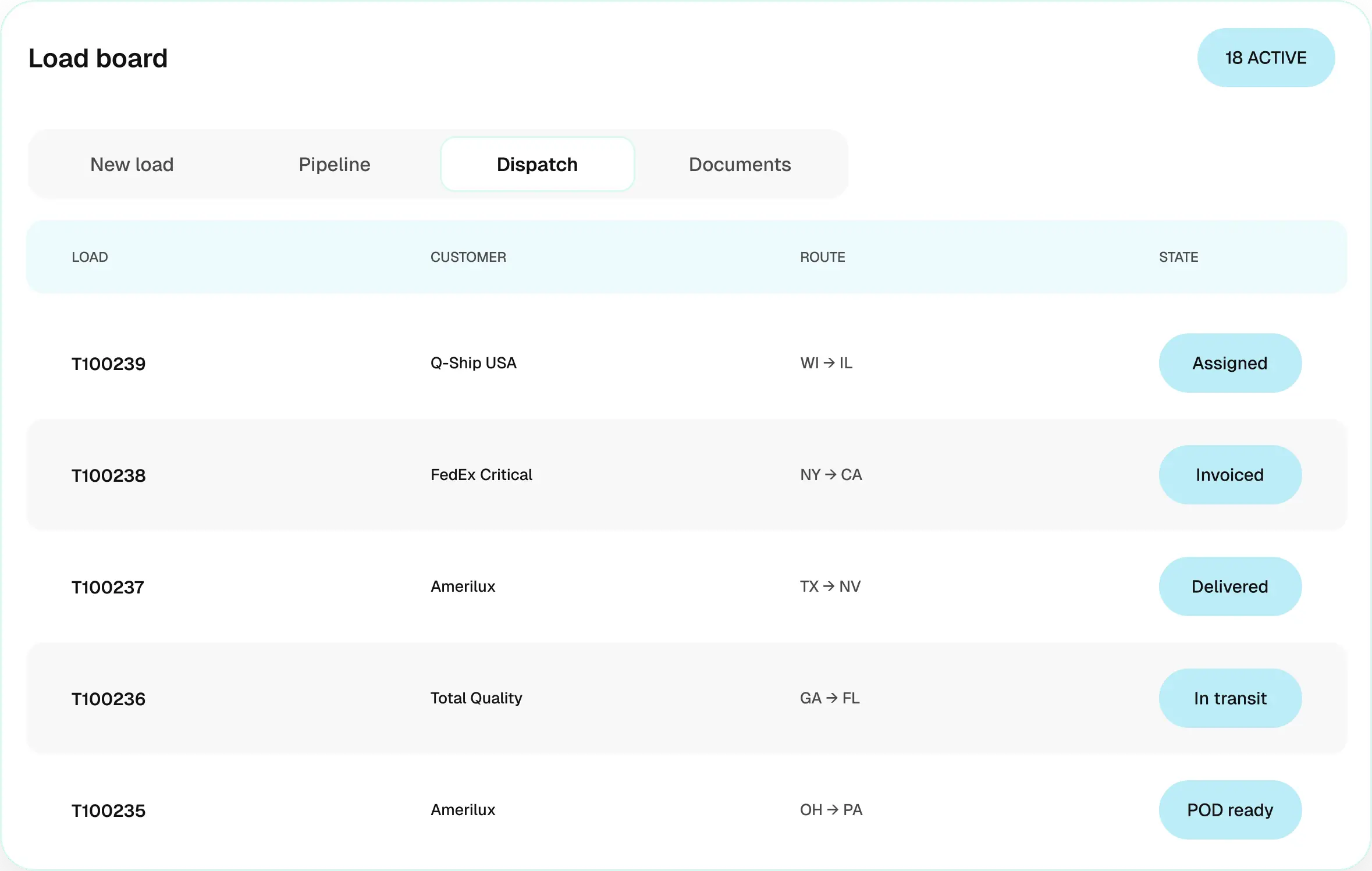
AI-assisted load entry cuts down on manual typing. Dispatchers assign drivers in seconds, track status changes live, and hand off completed loads to billing automatically.
Axleflow tracks license renewals, insurance certificates, and maintenance schedules, and flags what needs attention before it becomes a compliance issue.
Automatic alerts for licenses, insurance, and certifications
Maintenance schedules tracked by mileage or date
Audit-ready document storage for every driver and vehicle
Ready to See What Your Fleet Is Actually Costing You?
Pair the platform with hands-on setup that gets your units, service history, and inventory loaded properly, so the numbers mean something from the first week.
Trucks, trailers, reefer units, converters, and any other equipment you own or lease. Each one carries its own record with VIN, plate, ownership, specifications, and current status.
Q: Does Axleflow manage work orders and repairs?
Yes. Work orders are raised against a specific unit and track the parts used, labour, and shop invoice through to completion, building a service history that stays with the truck for its whole life.
Q: Can I see how much a single truck costs to run?
Yes. Purchase or lease payments, fuel, repairs, and downtime record against the unit, so total cost of ownership is available per truck rather than as a fleet average.
Q: How does this help with replacement decisions?
Maintenance spend trending upward on an older unit can be compared against the cost of a newer one. The decision comes from your own operating numbers instead of a rule of thumb about age or distance.
Q: Does Axleflow track parts and tire inventory?
Yes. Quantities on hand are tracked, items are issued against the work order and unit that used them, and reorder alerts fire before common parts run out.
Q: Can I see which trailers and equipment are sitting idle?
Yes. Utilization reporting shows active, idle, and out of service assets with distance and revenue per unit, which usually surfaces equipment you did not realize was parked.
Q: How does fleet management connect to compliance?
Inspection dates, maintenance intervals, and vehicle documents are shared, so a unit due for service or carrying an expired document can be flagged before it is assigned to a load.
Q: Does asset cost data feed our accounting?
Yes. Maintenance, parts, and payments recorded against a unit carry into expense tracking and cost per kilometre, so fleet costs appear in your margin figures rather than sitting in a separate system.